Analytics Review: Jaguars' Fourth Quarter Decisions Against Giants
Data analysis suggests the Jaguars' choice to go for two was correct, while their subsequent field goal attempt was a near even split in win probability.
By Sophie Menon ·
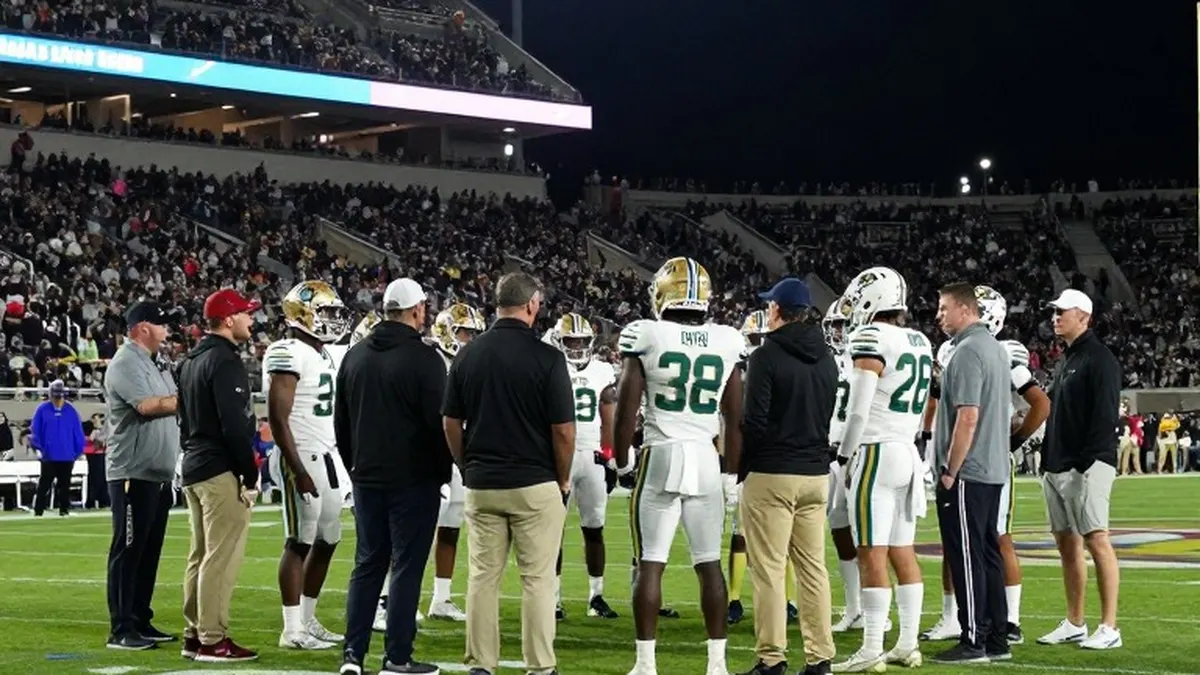
The Jacksonville Jaguars faced two significant game management challenges during the fourth quarter of their 23-18 loss to the New York Giants on Sunday. The team made controversial choices when trailing by eight points, first attempting a two-point conversion with 6:39 remaining and then opting for a field goal with 3:40 left on the clock.
According to ESPN Analytics, the first decision was a clear strategic advantage. The model indicates that going for two in this specific scenario was the optimal play, while the second decision was a razor-thin margin where either choice would have been statistically acceptable.
The initial situation arose after Brian Thomas Jr. caught a touchdown pass, leaving the Jaguars down 23-15. This is a standard scenario for a team trailing by eight points. The strategic logic dictates that attempting a two-point conversion improves the team's position for their next scoring drive. If the conversion is successful, a subsequent touchdown with a point after touchdown kick would take the lead. If it fails, the team can attempt another two-point conversion later to tie the game.
In this instance, the Jaguars increased their probability of winning by 1.4 percentage points by choosing to go for two. The break-even point for this decision was a 35% success rate, whereas the league average for such conversions stands at 48%. Although the Jaguars failed to convert the attempt, the analytics confirm that kicking the extra point would have been a distinct error.
The second decision came on fourth down at the 8-yard line of the Giants, with the score still 23-15 and 3:40 remaining. The Jaguars chose to attempt a field goal. ESPN Analytics calculated that both kicking the field goal and going for the touchdown resulted in nearly identical win probabilities of 13.7%.
This finding may surprise many observers who believe a team down by one score late in the fourth quarter should always go for the lead. Had the Jaguars attempted the touchdown, they would have needed to convert the fourth down, estimated at a 32% chance, and then successfully convert a two-point attempt to tie the game.
The nuance lies in the difference between tying and leading. By kicking the field goal, the Jaguars reduced their deficit to five points. This move carried the risk of not regaining possession, which ultimately occurred. However, it also preserved the possibility of winning the game outright with a touchdown if they had gotten the ball back.
The two decisions were interconnected. If the Jaguars had kicked the extra point after the first touchdown, they would have been down by seven points, altering the calculation for the fourth down play. Conversely, if they had converted the two-point attempt earlier, they would have been down by only six points, which would also have changed the math.
Despite the connection between the plays, the earlier decision to go for two was not a mistake. While simplified scenarios often focus on the trailing team scoring again, the detailed model accounts for more variables. The analysis concludes that going for two when down by eight points late in the game, typically starting from mid-third quarter onward, is almost always the superior strategic choice.
More News · National news · Report a business · Got a Story?